In the world of high-end consumer electronics, the enclosure is no longer just a protective shell—it is the product. Whether it is a custom mechanical keyboard, a high-fidelity audio interface, or a medical control unit, the chassis dictates the user’s first impression.
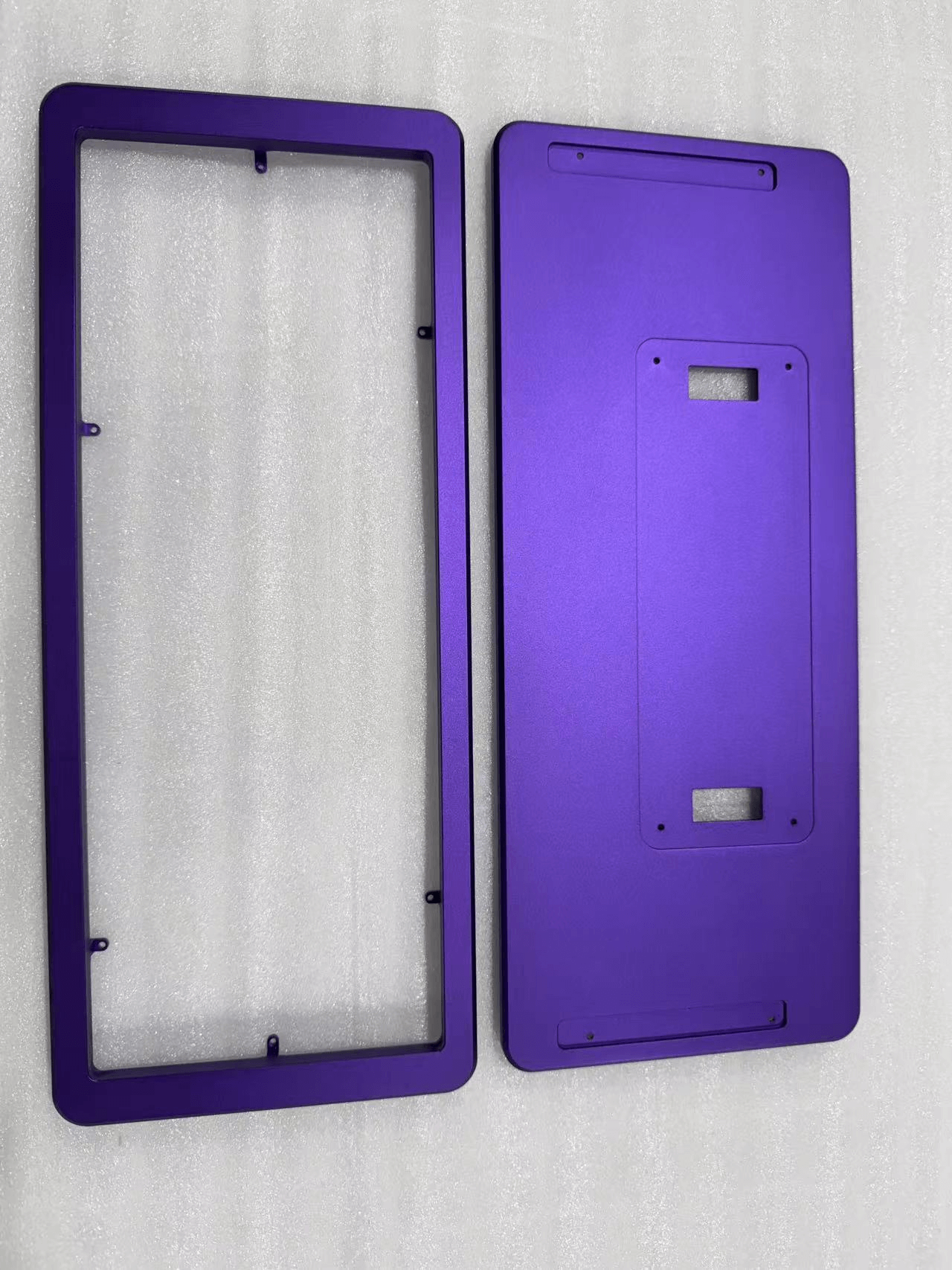
I recently shared a photo of a vibrant purple chassis on social media that garnered significant attention. It represents a classic engineering challenge: balancing structural rigidity with intricate aesthetic requirements.
Today, I want to move past the pretty picture and break down the manufacturing reality. How do we take a block of 6063 aluminum and turn it into a flawless, deep-purple statement piece without warping, chatter marks, or color inconsistency?
Table of Contents
- Material Selection: Why 6061 vs. 6063 Matters
- The Machining Strategy: Tackling Thin Walls and Distortion
- Surface Finishing: The Science Behind the “Perfect Purple”
Material Selection: Why 6061 vs. 6063 Matters
Looking at the image provided, we are dealing with a two-part assembly: a top frame and a bottom case. For applications like this, where the cosmetic finish is paramount, the choice of alloy is the first critical decision.
While Aluminum 6061-T6 is the industry workhorse due to its high strength and excellent machinability, for parts requiring high-quality anodizing, we often recommend Aluminum 6063.
Why? 6063 has a lower silicon content. When we run parts through our CNC machining services, 6063 responds better to chemical polishing and anodizing, resulting in a brighter, more consistent color with fewer visual artifacts. If this client had chosen AL7075 (for hardness), that beautiful purple hue would likely look dull or muddy due to the zinc content.
The Machining Strategy: Tackling Thin Walls and Distortion
The top frame in the image presents a specific CNC challenge: Thin-Wall Instability.
If you look closely at the narrow borders of the frame, you will see a high aspect ratio between the length of the part and the thickness of the wall. When a cutter engages with these thin sections, two things usually happen if the operator isn’t careful:
- Chatter: The material vibrates against the tool, leaving ugly ripple marks.
- Warpage: As we remove material, internal stresses in the billet are released, causing the frame to bow or twist.
How We Mitigate This
- Roughing: We remove the bulk of the material, leaving about 0.5mm of stock.
- Stress Relief: We sometimes pause to allow the material to settle or perform a secondary heat treatment if the tolerances are extremely tight (under +/- 0.02mm).
- Finishing Pass: We use high-speed, low-engagement toolpaths to shave off the final layer without exerting thermal stress on the part.
Furthermore, notice the small tabs (screw bosses) on the interior of the frame. These are delicate. A heavy-handed CNC program will snap these off. We utilize smaller end mills and reduced feed rates in these specific zones to ensure feature integrity.
Surface Finishing: The Science Behind the “Perfect Purple”
The caption mentioned the “tactile experience.” In engineering terms, this refers to the Surface Roughness (Ra) and the anodizing layer.
1. Bead Blasting (The Satin Look)
Before the part ever touches a dye tank, it must be sandblasted. Looking at the matte finish on this chassis, the operator likely used #120 to #150 grit glass beads.
- Too coarse (#80): The surface looks rough and industrial.
- Too fine (#220+): It looks almost polished and shows fingerprints easily.
- The Sweet Spot: The #120 grit hides machining tool marks and provides that premium “satin” feel that is popular in custom keyboards and audio gear.
2. Anodizing (The Hue)
Achieving black or silver is easy. Achieving a specific shade of deep purple—and ensuring the top frame matches the bottom case perfectly—is difficult. This is Type II Sulfuric Acid Anodizing.
The challenge shown in the image is consistency on flat surfaces. Large, flat areas (like the back of the bottom case) are prone to “iridescence” or streakiness if the anodizing bath current density isn’t uniform.
To prevent this, we:
- Control the Temperature: The bath must be kept within tight temperature ranges to control pore size.
- Racking Position: We carefully select where to rack the part (usually inside the screw holes) so no contact marks are visible on the exterior A-surfaces.
- Dye Saturation: Organic dyes (used for purple/red/blue) can fade if the sealing process isn’t perfect. We use a high-temp nickel acetate seal to lock that color in.
This level of detail is why surface finishing is just as important as the machining itself. A bad finish ruins a perfect part.
Moving from Prototype to Production
This chassis likely started as a single unit to test fitment—checking if the PCB fits, if the USB port aligns, and if the case screws thread smoothly.
If you are currently in the design phase, do not jump straight to hard tooling. We recommend rapid prototyping your chassis first. We can machine a single unit in the production-grade material (Aluminum) so you can validate the thermal performance and assembly tolerance before committing to a batch of 500 or 1,000 units.
What Buyers Should Verify
Before placing an order, confirm material grade, tolerance-critical features, inspection methods, finishing limits, packaging, lead time, and applicable certifications with the selected manufacturing partner. SP Precision coordinates RFQ review, DFM communication, quotation, and supplier follow-up; project-specific production capabilities and certification documents are confirmed before order placement.
Conclusion
The purple chassis in the image is more than just a box; it is a demonstration of process control. From the 5-axis milling of the rigid corners to the precise chemical composition of the anodizing bath, every step matters.
Whether you prefer bold colors like this purple or classic industrial black, the fundamentals of manufacturing remain the same: precision, material knowledge, and strict quality control.
Ready to manufacture your enclosure?
Don’t let your design fail at the finish line. Send us your STEP files today.