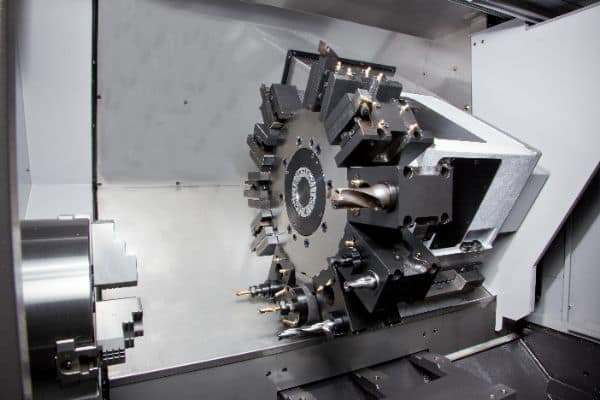
In precision manufacturing, high-quality CNC turn-mill parts are rarely just “turned.” Modern components like complex flanges and shafts require off-axis holes, milled keyways, and strict flatness tolerances that a standard lathe cannot achieve alone.
1. The “One-Hit” Strategy: Perfect Phase Synchronization
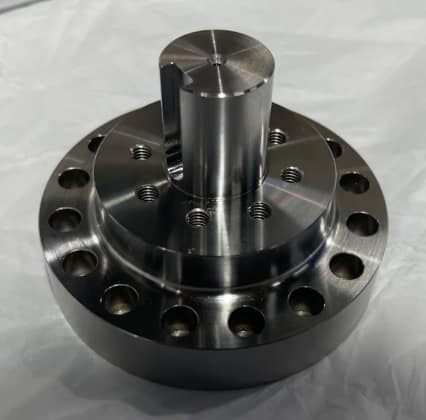
Take a look at the stainless steel component. It features a central turned shaft, a milled keyway, and a specific pattern of tapped holes on the flange.
The Engineering Challenge:
The most critical tolerance here is Position. The keyway must be perfectly aligned (phased) with the bolt holes.
- The Old Way: Turn the shaft on a lathe -> Remove part -> Clamp on a mill -> Indicate center -> Cut keyway.
- Result: Accumulated error. The keyway might be off-center by 0.05mm, causing assembly failure.
Why it matters:
By eliminating the second setup, we guarantee:
- True Concentricity: The shaft axis and the hole pattern share the exact same center.
- Perfect Phasing: The angle between the keyway and the first hole is mathematically precise.
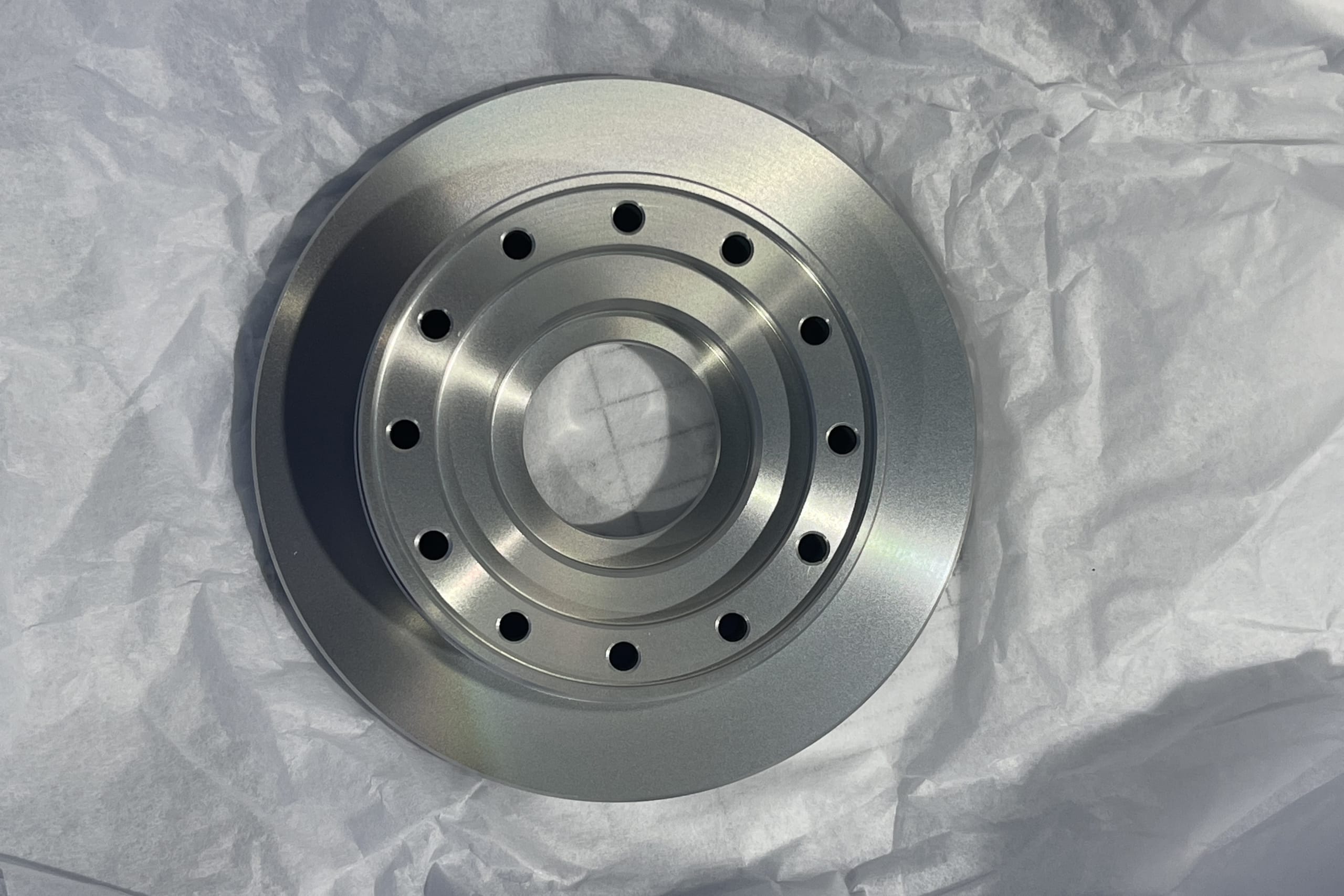
2. The “Rainbow” Finish: Engineering for Air-Tight Sealing
The Function:
These flanges are designed for an application requiring Air-Tight Sealing (vacuum or high-pressure fluid).

- The Requirement: A standard “turned” finish (spiral marks) can create a leak path for gas or fluid to escape.
- The Solution: We achieve this specific “Rainbow Finish” using a large-diameter Face Mill (Fly Cutter) running at high RPM with a slow feed rate.
How we control it:
Achieving this mirror-like finish on 500 parts requires more than just a sharp tool:
- Program Optimization: We calculate the exact chip load to prevent vibration (chatter).
- Machine Rigidity: Our machines are calibrated to ensure the spindle is perfectly perpendicular to the table, eliminating “step-over” marks.
- Result: A surface roughness (Ra) that meets strict sealing requirements, straight off the machine.
3. Material Versatility: 6061-T6 vs. Stainless 304
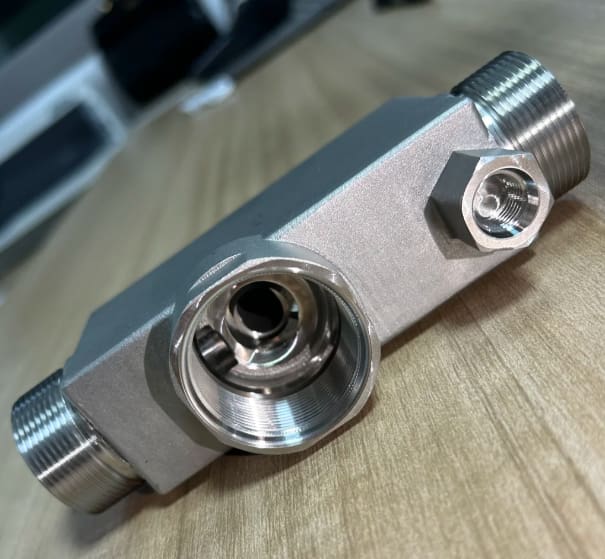
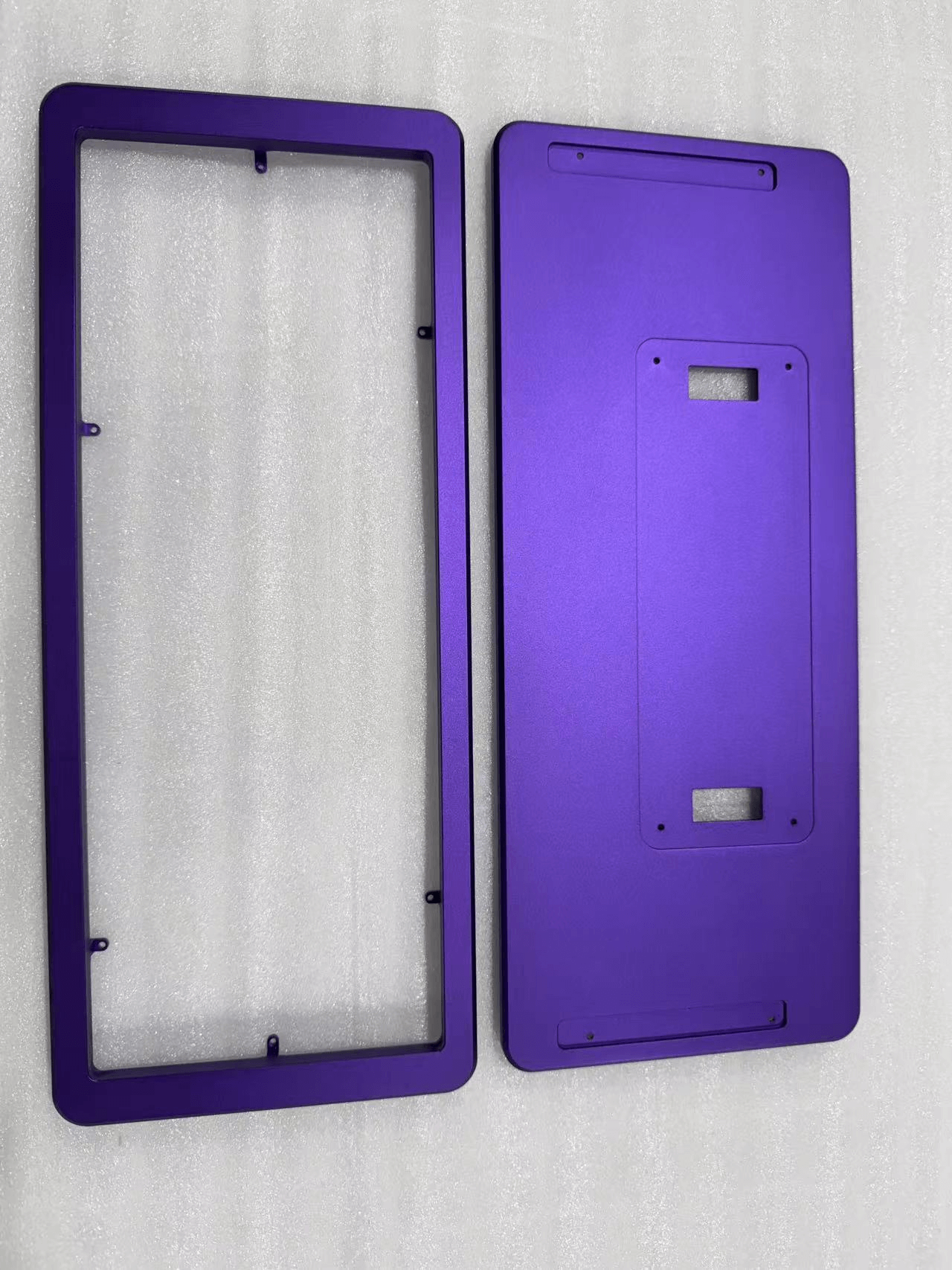
These photos represent the core materials we machine daily for automation and robotics industries:
- Aluminum 6061-T6 : Lightweight and easy to anodize. Ideal for high-speed robotic arms or electronic housings.
- Stainless Steel 304/316 : Tough and corrosion-resistant. Essential for drive shafts, outdoor machinery, or food-grade equipment.
Conclusion
Don’t risk your assembly with “close enough” parts.
Send us your STEP file today. We will optimize the machining strategy for maximum precision and sealing performance.
For a project-specific quotation workflow, review our CNC turning and turn-mill services, including runout, datum, inspection, and secondary-operation planning.